Toy Story 5 and Our Balanced Screen Time Approach
My kids access and use of screens have been one of my biggest anxieties to navigate as a parent. I have taken the decisions around my kid’s screen time very seriously. As a millennial who didn’t have access to a smartphone until college and didn’t start watching short video content until my 20s, I worry endlessly about the effects of screen time on my children. Knowing how much I can get distracted, disheartened, and disinterested in other things when I overuse my phone or binge watch a tv show… I feel ever aware of the consequences of the great experiment of letting our kids, with their far less developed brains, have access to the same things that are hard for me, as an adult, to manage.
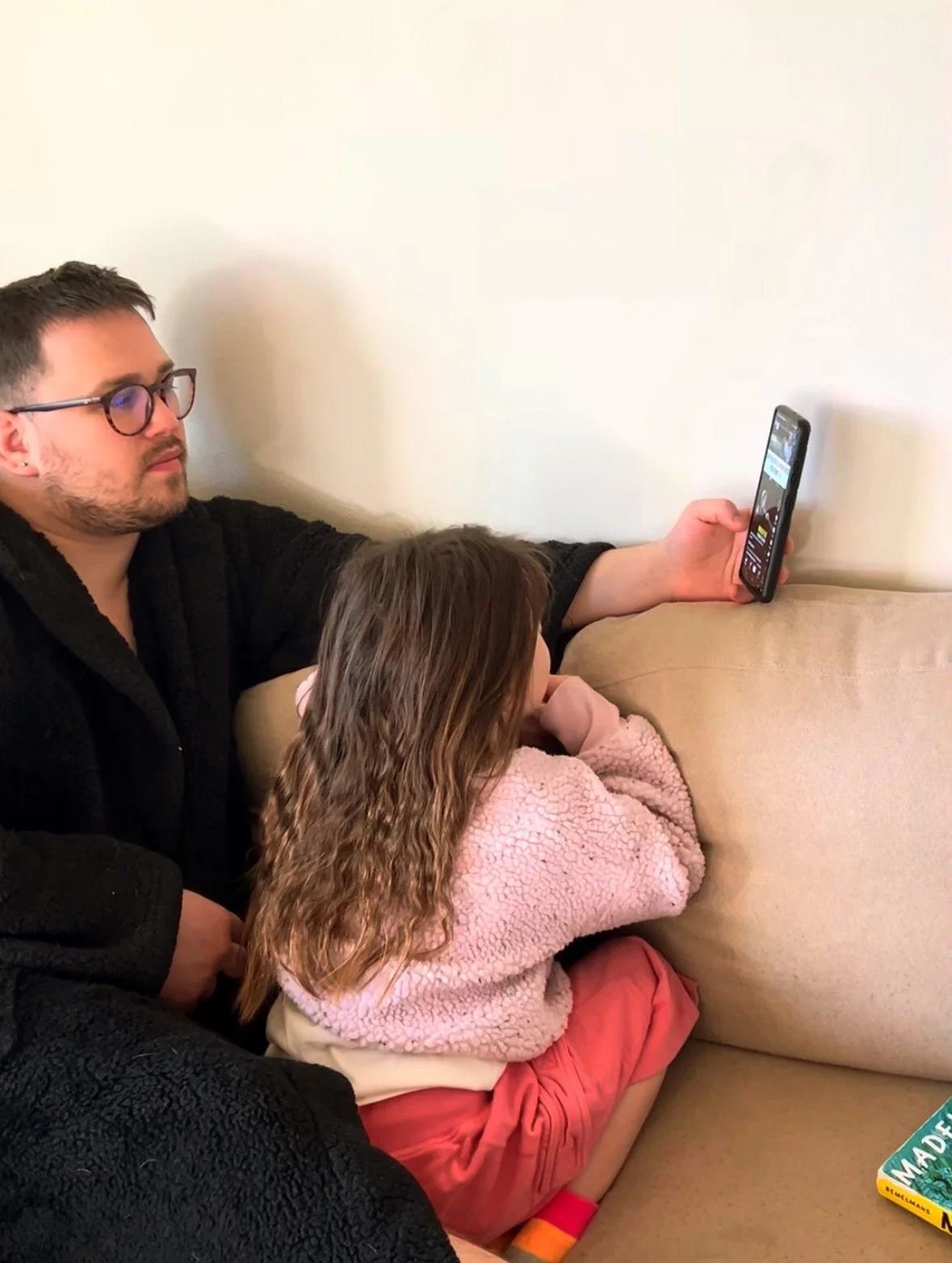
Let’s be real…
Sometimes it’s much harder for us parents to stay off our screen around our kids then it is to keep our kids off of screens!
Me and my husband brought my kids to see Toy Story 5 this weekend, and it definitely hit a nerve for us parents. Between every other kid having an iPad, which made Bonnie, a kid doing developmentally normal kid things get cyberbullied; to the parent’s lackadaisical approach to screen time limits, I was angry that we have to raise our kids in a world where this type of age-inappropriate technology exists.
I wish there was an “opt-out” button, but the reality is that there isn’t, and as parents, we have to get in the mess to help our kids navigate it.
There is so much noise from each side. The screen free parents saying that it’s vital to our children’s development to be off all types of screens (iPads, television, computers, etc.) while other parents are saying that children who have unlimited access to screen time care about it less and “self-regulate” — to more middle-ground opinions where parents are allowing their kids “big screens” (television/computer) but not personal devices (like iPads and phones).
Our oldest is seven (and a half — the half is very important), and we haven’t yet had to navigate screen time in the cell phone years. But, as people whose children play community sports and are in public schools, our children are not sheltered, and we have had to navigate many screen time discussions and decisions throughout the last seven years. I think we have found a good balance… not avoiding technology but also not letting it consume out children’s life… and wanted to share how we have handled screen time in each stage in case you are looking for more ideas of what might work for your family.
Baby - Toddler Years
When our first child was born, we decided pretty early on to follow the American Academy of Pediatrics screen-time advice and severely limit screen time until she was eighteen months to two-years old. She was only sixteen months old when the pandemic began and we were all stuck at home (me in online school and my husband working full-time) and surprisingly, we held to our original set guidelines. Before the age of two, the only screen time we allowed was video calls with family, mainly her Uma (my mom), who lived eighteen hours away at the time; and those video calls quickly turned into her own personal Ms. Rachel sessions with grandma once the pandemic began.
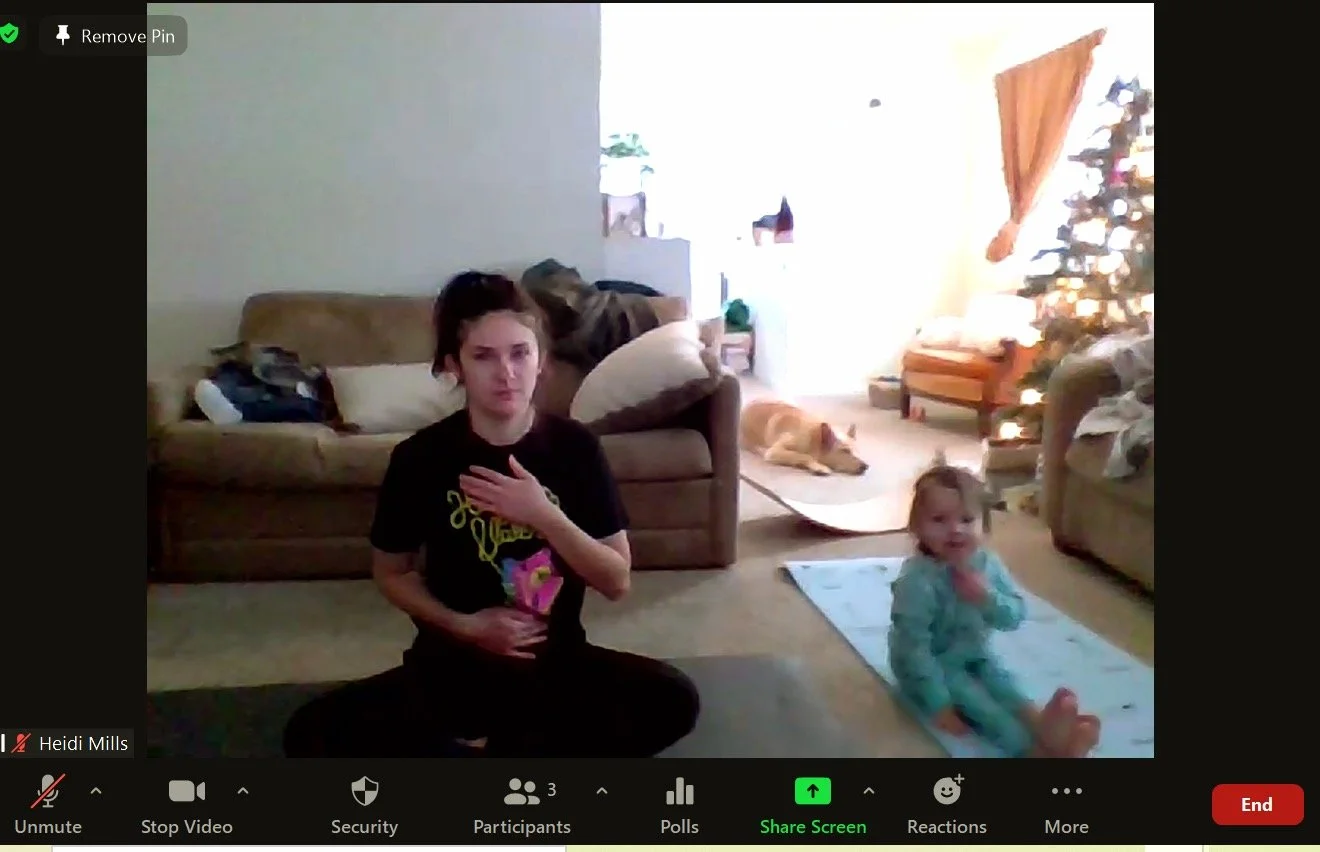
Zoom yoga class with Grandma during Covid
The pandemic was weirdddd…
I often hear people say that they have to do screen time for their baby or one-year-old in order to have any alone time or to help with their child’s “boredom” …
Babies are learning all about the world for the first time. They do not get “bored” by what we get bored by. They could sit and bang a potato masher on the floor for an hour and learn all about the texture of the masher, the cool of the metal, and the sound it makes on different surfaces…
but if a baby is used to constant stimulation and don’t have to use the curious part of their brain to entertain themselves, then yes — they will whine for entertainment (just like us adults would rather watch TikTok videos then conduct a chemistry experiment — one is much easier and more momentarily satisfactory).
And that is not to say I didn’t have whiney or clingy babies. My first baby was a stage five clinger (with no siblings to entertain her) until she was at least three years old. But as the parent, deciding I wasn’t okay with her having screen time to distract her while I was cooking or doing other household tasks, meant I then had to build up both her and my resilience to discomfort by having times where she was put in a safe area to play while I completed a task. Often, she would stand at the gate or by my feet and whine and cry while I gently said, “Mommy is cooking right now — when I’m done putting the spaghetti in, I can come hold you!” until she eventually got bored of whining at me and started playing with the toys I had set out for her. While it was frustrating at the moment to deal with a whiny baby or toddler, both my kids became amazing independent players, which allowed me time to complete tasks I needed to get done throughout the day without relying on screen time.
As my eldest’s second birthday approached, we hemmed and hawed about what our approach should be. Our daughter had developed such a wonderful skill of playing independently between the ages of one and two… and we didn’t want to mess with the attention span she had developed; but as parents still stuck at home in the middle of a pandemic, we loved the idea of some extra time each day without a toddler whining at us while we got some work done.
We decided to stick with what we had learned works best for toddlers in all situations — setting boundaries.
We set a regular time each day (after lunch) where she was able to watch two, thirty-minute shows. This consistency really was the key, wiping out all whining for shows at other times of the day, as she knew exactly when she watched tv and for how long.
A very important part of this approach to us was to never utilize screen time to distract from a boring situation or unwanted behavior. As a family who didn’t see iPads or other handheld devices fitting into our parenting plans, we never wanted our kids to use media to cope with their feelings, or to help us parents cope with toddler behavior in public.
While I certainly wanted to pull up a YouTube video in the grocery store once or twice, I worried that if I did, they would learn that throwing a fit out in public meant they got a reward of a fun video. Ultimately, I had a strong desire for my kids to learn how to interact and act respectfully in adult situations; and while that certainly took some time and patience to get through that learning curve, in retrospect, I feel really happy with that decision as our kids (at four-years-old and seven-years-old) are very enjoyable to take out places and we can even enjoy adult-focused activities with them.
Preschool - Elementary Age
As my kids entered preschool, we kept the same screen time rules; two shows a day either after lunch or after homework is done (once my oldest was in elementary school). We also started doing Friday night movie nights as a family, as our daily screen time limits prevented them from ever watching a movie and there were many we wanted to share with them. This is still a very coveted weekly tradition, where we order pizza and all relax for the night, with a rotating schedule of who gets to pick the movie each week.
As our eldest went to public school and started to learn that other kids play video games or games on their iPads, we didn’t exclude her from it but added it into our daily limit already set. If her friends are all into a game and she wants to know what it’s about so she can talk with them about it, we let her play it with supervision instead of her daily alloted show time (one hour). We are still very careful about what she is exposed to, and only let her play a video game on the big tv in the living room where we can watch her, or if she plays on the family iPad (we don’t have a personal iPad but my husband was gifted an iPad from his work about five years ago we allow them to use for these occasions) we keep the door open where she is playing and check in that she hasn’t clicked to any other apps then the one we approved her to play on. We also tell her what are the approved apps on the iPad, and don’t shy away from being honest with her about the dangers of the world wide web (equating it to stranger danger) and have told her she will not be allowed to use the iPad for a very long time if we ever saw her breaking those boundaries.
But there are still many things we will not allow and she is left out on (like Roblox — we will absolutely not let her play that; and we don’t really allow YouTube as well), and we are OK with explaining that to her and letting her miss out on some things her friends are doing for her protection. We try to be balanced and let her do the things we are OK with (like Minecraft), when she asks, so she doesn’t feel excluded or deprived of the experiences her friends are having, while still making sure she is having plenty of time for play and decompression.
We also have purposely chosen a school that doesn’t do any personal devices, like Chromebooks, in the classroom for elementary school, which we are glad very much limits her exposure to screens on a day-to-day basis.
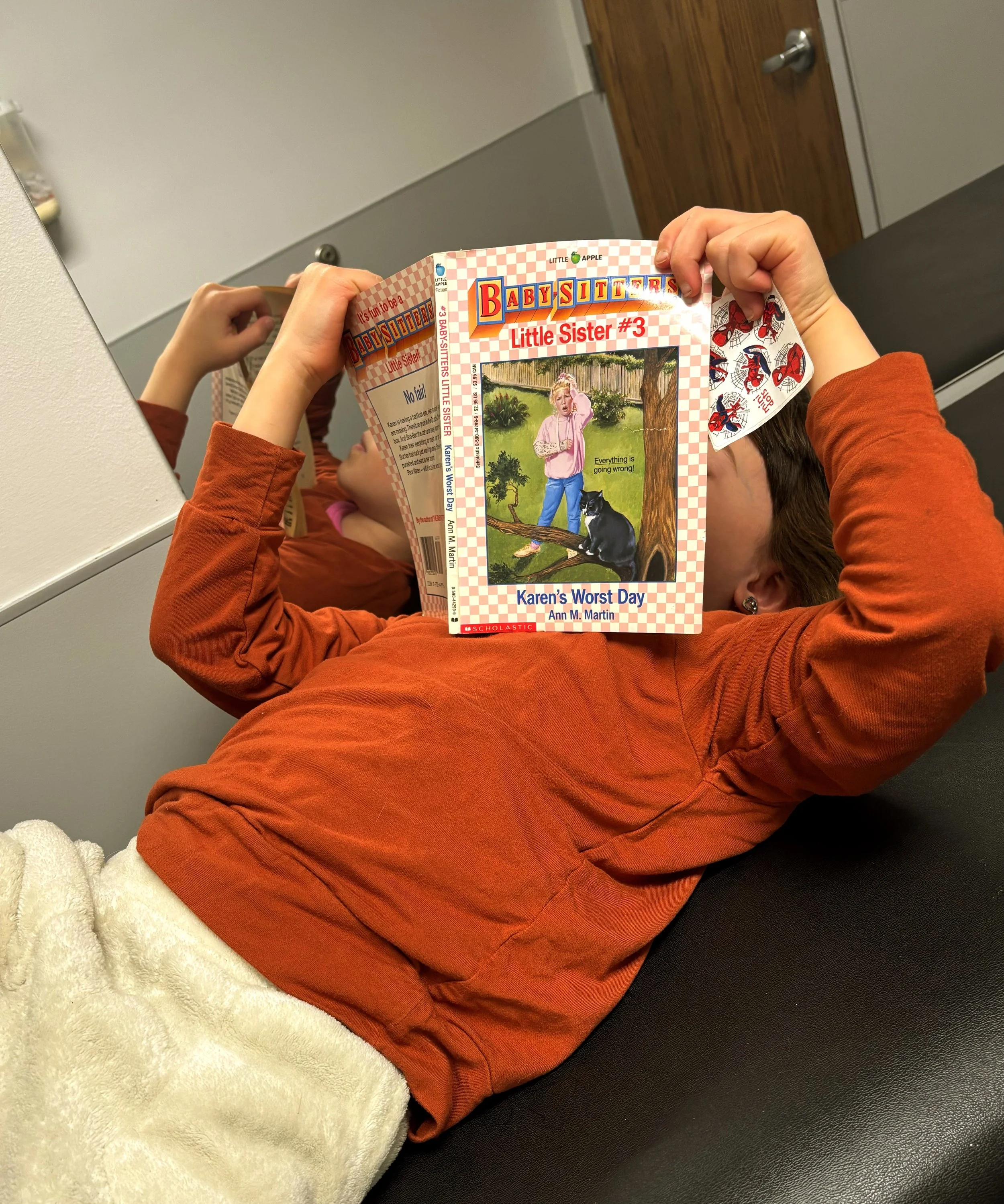
We have always brought books and other small, quiet toys for things like waiting rooms instead of allowing them to watch anything on our phones or an iPad.
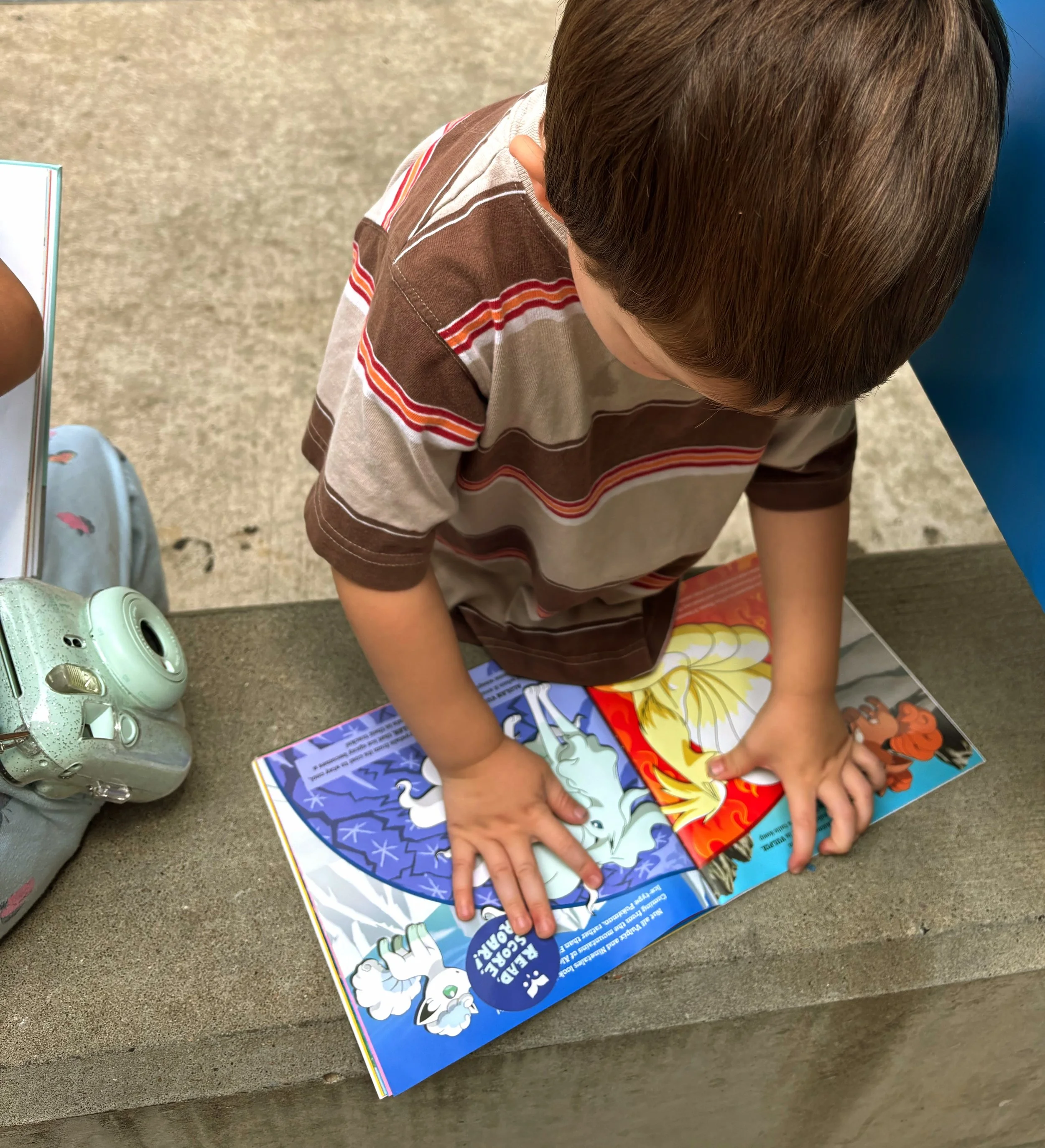
As our kids have gotten older and started bringing their own books to read while waiting for an appointment, or public transportation (second picture), I have been more intentional about bringing my own book instead of scrolling on my phone, to teach that you don’t need a personal device to entertain you in these situations.
I truly believe us setting up our kids in their young years with no screen time and then very limited screen time, has helped them a lot in this stage of childhood. They have learned so much through independent play, imagination, and creativity; and never whine for screens. Even though they are learning that some friends have much freer reign of their tv or personal devices, they never complain to us and truly enjoy life outside of screen time.
I fully recognize (and am nervous for!) the increased pressure to adapt to including personal devices in our children’s life as they age and their friends start getting cell phones. I have been actively preparing for this by talking to our pediatrician about their recommendations (no smart phones until 8th grade!), being open with my child’s friends’ parents about the Wait Until 8th Pledge and asking parents who have older kids how they have handled cell phones, texting, and chats with their children.
We know parents who have started utilizing the Tin Can phones, smart watches, or “dumb” phones as their child grows and gains independence and are open to all of those options in the next stage of parenting in a technologically driven world. While we don’t want our children to feel excluded, we also recognize it is our primary responsibility as parents to protect our children and help them develop and learn in age-appropriate ways — which so far has been through play, art, writing, and reading.
Caveats
Our two caveats to our screen time rules are when a child is sick enough to be bed bound or if we are on a long car or plane ride (we don’t allow screen for rides under one hour).
If one of our children is sick enough to not want to play, we will hook them up with a computer and movies in their bed so they can rest and relax — giving them breaks to make sure they are eating and drinking or going in and spending some time reading to them. We also don’t have screen time limits for long trips, which has worked really well for us as since they don’t typically get much screens, our kids tend to really envelop themselves in the movies they are watching and stay entertained most of our trip. Typically during long trips we will set a timer for around an hour after every stop and have them play with toys, play dough, or listen to their Yoto; then after the timer is up, they can use the laptop or iPad we brought for them to use with their pre-downloaded movies on it.
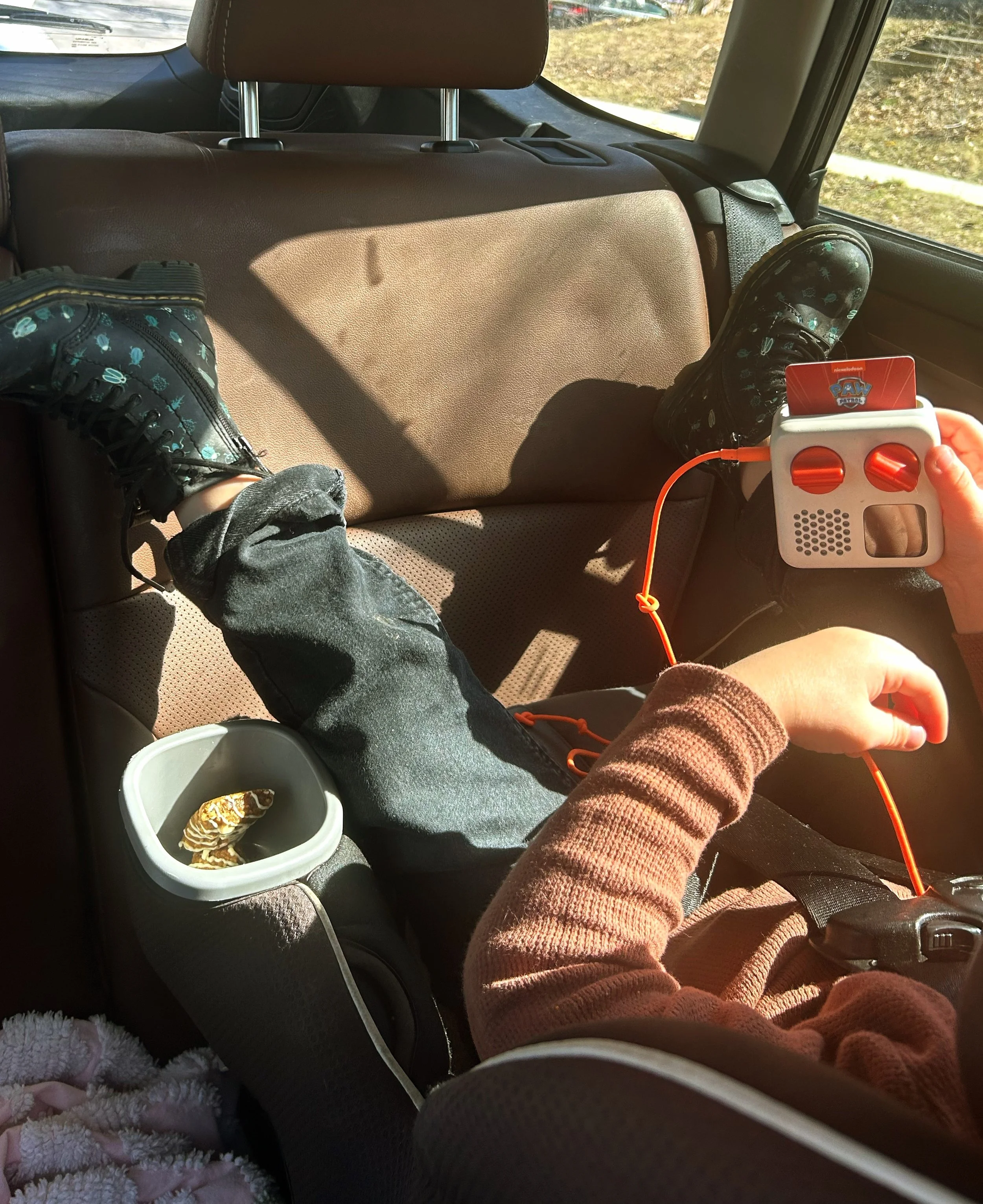
A Yoto has been one of our favorite tools for reducing screen time.
We have had the same one for four years and their audiobook options range from young toddler age stories like Winnie the Pooh and Paw Patrol, to Harry Potter and Chronicles of Narnia for our older child. The also have music cards and ones where you can record your own story!
We try to really focus on a routine and predictable limits with screen time so our kids know what the rules are and don’t whine or complain for additional screen time outside of those parameters; but we also aren’t dictators, and sometimes on a really rainy or boring day we will surprise them with a mid-day movie or extra show time.
I want to recognize that talking about screen time always feels like a judgmental parenting topic. I want to make it clear that I don’t look down on other parents who choose differently than us and am not judging parents who I see out in public with their kids on an iPad. While I certainly have the belief that as a society, we need to move our kids away from constant distraction and instant gratification to help preserve their mental health and well-being, I don’t judge individual parents for what they need to do — as our kids all have different needs and abilities, and we parents all have different levels of support that effect our parenting choices.
I recognize all these parenting choices I’ve been able to make come from the privilege I have of good frustration tolerance from things like — daily breaks because my partner is very hands-on and is an equal parent to our children, working part-time outside the home, and the economic means for the occasional babysitter and night-out. I have been working with families for years and very much understand that not everyone has the same situation as me and screen time is their only parenting break but as I state in my blog rules, this is my blog and is about me and my choices.
I would love to hear in the comments how you approach screen time as a family… what has worked for you and what hasn’t… and would love to hear ideas from families who have older children then me of how they have dealt with the cell phone dilemma as their kids have gotten older.